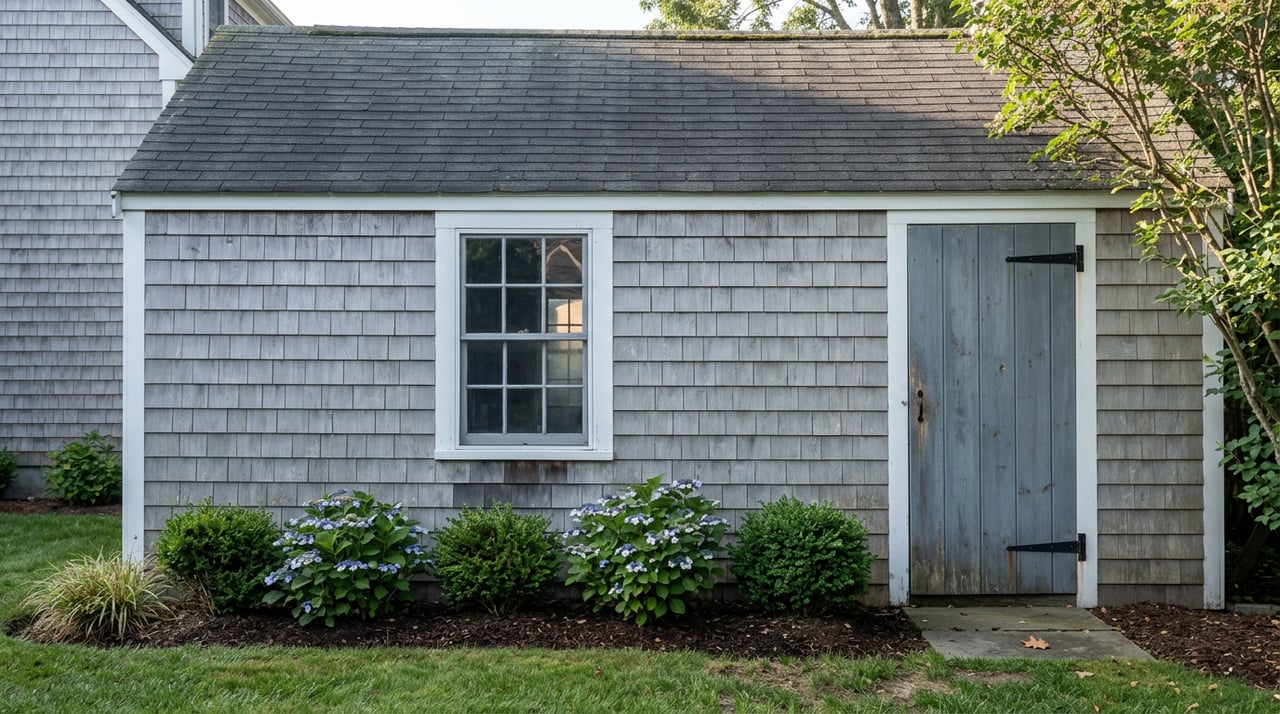
"We are on this first frontier, in this first wave." That's how Tim O'Reilly, director of preconstruction at the ADU builder Backyard ADUs, described accessory dwelling unit economics in Massachusetts to the Boston Globe in February 2026, one year after the state's ADU law took effect. Nobody has clean data yet on whether a $200,000 backyard unit adds a dollar to your resale price.
That uncertainty applies statewide. In Newburyport, it's compounded by a rule the city wrote on its own, one that a lot of the ADU marketing circulating around the North Shore never mentions.
What the state promises, and what Newburyport added on top
Massachusetts' Affordable Homes Act, signed by Governor Healey in August 2024, made accessory dwelling units up to 900 square feet legal by right in single-family zones statewide starting February 2, 2025. Towns can't ban them, can't require a special permit, and, following an Attorney General ruling on a Canton bylaw in June 2025, can't impose minimum lot sizes to keep them out. Autonomous reports that a separate ruling on a Leicester bylaw in May 2025 blocked towns from capping bedroom counts beyond what the state building code already requires.
Newburyport's ordinance also addresses short-term rentals. When the City Council adopted its local ADU ordinance in January 2025, it didn't stop at matching the state minimum. The adopted ordinance bans renting the ADU for stays shorter than 30 days, and it goes further: once you build an ADU, the principal house on that lot loses its short-term rental eligibility too. The ordinance also prohibits ever selling the ADU as a separate unit from the main house, so there's no condo-style exit down the road.
Some ADU marketing cites estimates of a 7 to 10 year return and a 20 to 30 percent increase in property value, based on national data rather than Newburyport-specific rules. Those national figures may not translate directly to Newburyport, where local rental rules shape the options available to homeowners.
Long-term rental still works. Vacation rental doesn't.
The nuance matters here. Newburyport's ban is on short-term rentals, meaning stays under 30 days. A 12-month lease is still allowed. That distinction is the whole ballgame if your reason for building an ADU is a coastal summer rental play versus a steady tenant.
The city's own planning materials from October 2024 described the ordinance's purpose in language that sounds exactly like the generic pitch: give homeowners "a way to obtain rental income, companionship, security, and services" and let owners downsize while staying in the neighborhood. That stated purpose was broad; the adopted rule, three months later, prohibits short-term rentals while allowing long-term rentals. If you're weighing an ADU on a Plum Island or in-town lot expecting to run it the way you'd run a beach cottage, the ordinance already decided that question for you.
What the math actually looks like
Here's what's known, without guessing at what isn't:
- Build cost. The Globe cites the ADU-tracking site AduWizard putting typical Massachusetts ADU construction between $150,000 and $300,000, with higher-end builds exceeding $500,000.
- Rental range. One statewide ADU guide published in early 2026 estimates North Shore long-term rentals at roughly $1,800 to $2,800 a month, with the caveat that actual income depends on local conditions and comparable rentals in the immediate area.
- Hold period. Dana Bull, a Compass real estate adviser in Marblehead, told the Globe: "Most people only live in their house for an average of seven years." That's the window an ADU has to earn back its cost before a sale resets the equation.
- Resale data. According to Tara Smith, press secretary for the state's Executive Office of Housing and Livable Communities, it's simply too early for a complete picture on how ADUs affect home values statewide. The 1,224 ADUs approved statewide in the 2025 survey year isn't enough volume yet to generate resale comps.
Run the simple version of the numbers. A $200,000 ADU renting at $2,000 a month covers its own construction cost in a little over 8 years of gross rent, before property tax, insurance, maintenance, financing, or vacancy are subtracted. That's already past the average 7-year hold Bull describes. Add Newburyport's ban on the higher-margin short-term option, and the math gets slower, not faster, for anyone hoping the unit pays for itself before they sell.
Table: what you can and can't do with a Newburyport ADU
| Question | Answer under current ordinance |
|---|---|
| Can I rent the ADU long-term (30+ days)? | Yes |
| Can I rent the ADU short-term (under 30 days)? | No |
| Can I still short-term rent the main house once I add an ADU? | No |
| Can I sell the ADU separately from the house later? | No |
| Does the ADU still have to meet Title 5 septic capacity? | Yes |
| Is the ordinance final, or still being revised? | Still in motion, see below |
The rule isn't finished changing
Newburyport's ADU ordinance isn't a fixed target. A January 20, 2026 City Council agenda includes a planning memo on a proposed ADU amendment, meaning the version in effect today may not be the version in effect by the time a renovation or purchase closes. Anyone budgeting an ADU into a deal right now should confirm the current ordinance language with the city before finalizing plans, not rely on a builder's brochure or a blog post, including this one, as the final word.
Why this matters more on Plum Island
If you're looking at a lot in Newbury's stretch of Plum Island rather than downtown Newburyport, there's a second constraint layered on top of the rental rules. Newbury's own zoning bylaw requires that any ADU proposed within the Plum Island Overlay District stay within the bedroom count already set for that lot, and separately caps total bedrooms across the main house and ADU combined at whatever the property's permitted septic system can handle under Title 5. On barrier-island lots where septic systems were sized decades ago for a smaller footprint, that cap can rule out an ADU entirely before rental rules are even a factor. This is the same Title 5 constraint that reprices septic-dependent listings across Essex County generally, showing up here specifically at the intersection of ADU zoning and existing wastewater capacity.
What this means depending on why you want one
Housing a parent or adult child. The short-term rental ban and the no-separate-sale rule barely register here. This is the use case the ordinance was actually built around, and it still works cleanly.
Long-term rental income. Still legal, still worth modeling, but price it against the $1,800 to $2,800 monthly range for the North Shore, not a national average, and consider how Newburyport's specific restrictions affect the calculation.
Seasonal or vacation rental income. This is where the gap between pitch and ordinance is widest. If short-term coastal rental income is the reason you're considering an ADU, Newburyport's rule removes that reason before you break ground.
Buying a home that already has an ADU, or a lot zoned for one. Ask which version of the ordinance applies to the property, whether any short-term rental or separate-sale restriction is already recorded against the deed, and whether the existing septic system has documented capacity for the bedroom count you're planning.
FAQ
Can I Airbnb an ADU I already built in Newburyport? Not under the current ordinance. Rentals under 30 days are prohibited for both the ADU and the principal dwelling once an ADU exists on the lot.
Does building an ADU guarantee my home is worth more when I sell? There's no data yet to confirm that, according to the state's own housing office. The ADU law took effect in February 2025, and approved units statewide haven't generated enough resale transactions to show a pattern.
Is the rule the same in Newbury as it is in Newburyport? No. Newburyport's ordinance governs short-term rental use and separate sale. Newbury's bylaw, which applies to its portion of Plum Island, ties bedroom counts to septic capacity under a separate overlay district. Confirm which municipality's rules apply to your specific parcel before budgeting a project.
If you're weighing an ADU as part of a purchase, a sale, or a renovation anywhere between downtown Newburyport and the Plum Island causeway, the ordinance details above change the numbers more than most of the marketing does. The Doug Danzey Group works these questions alongside the financing side of the deal, not after the fact. Schedule a call before you lock in a floor plan or an offer price around income the current rules won't let you collect.
This article is general information, not legal, tax or financial advice. Consult a qualified professional about your situation.